Launching a website without a proper checklist is like opening a shop without checking whether the sign is readable, the door unlocks, and the lights work. You might get away with it — or you might spend months wondering why nobody's coming in.
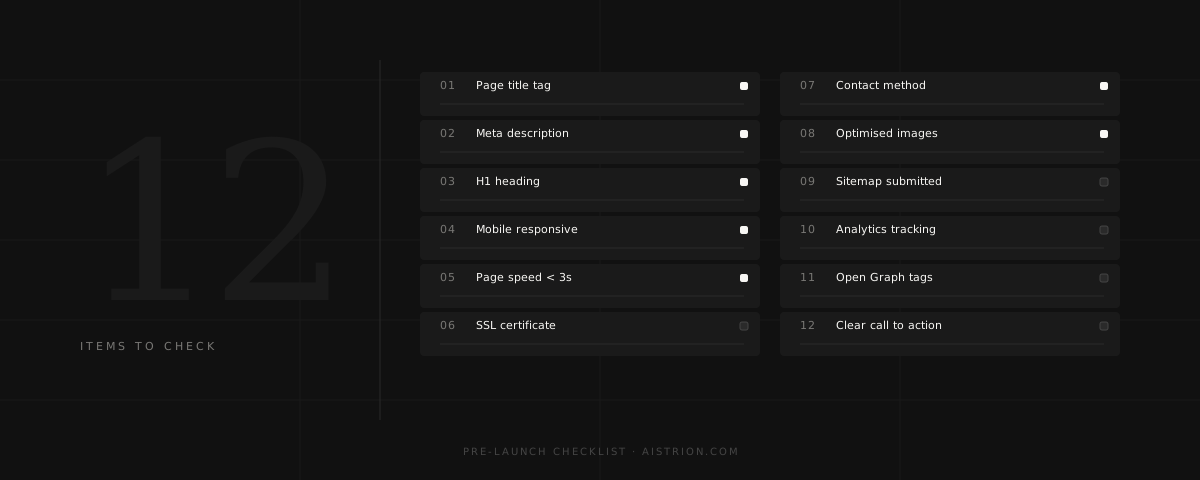
At Aistrion, every site we ship goes through a thorough pre-launch review. These are the twelve things we check without exception — and the reason each one matters to your business.
The checklist
-
01A clear, keyword-rich page titleYour page title is the single most important on-page SEO element. It appears in the browser tab, in Google's search results, and when your link is shared on social media. It should describe what you do and who you serve — not just your business name.
-
02A compelling meta descriptionThe meta description is the snippet of text that appears below your title in Google. While it doesn't directly affect rankings, a well-written description significantly improves click-through rate — which does affect rankings. Keep it under 160 characters and include a call to action.
-
03One clear H1 headingEvery page should have exactly one H1 — the primary heading that tells both Google and visitors what the page is about. It should be the first thing a visitor reads and should naturally include your main keyword.
-
04Mobile responsivenessOver 60% of web traffic is now on mobile devices. Google uses mobile-first indexing, meaning it crawls and ranks your mobile version first. If your site breaks on a phone, you're losing both rankings and customers.
-
05Page speed under 3 seconds53% of mobile visitors leave a site that takes more than 3 seconds to load. Use PageSpeed Insights to check your score and fix the top issues — usually large unoptimised images or render-blocking scripts.
-
06SSL certificate (HTTPS)If your site still shows "Not Secure" in the address bar, visitors and Google both distrust it. An SSL certificate is free with most hosting providers. There is no reason not to have one — and several good reasons to get it immediately.
-
07A working contact methodThis sounds obvious, but a surprising number of sites have broken contact forms, incorrect email addresses, or phone numbers that go nowhere. Test every contact method yourself before launch — from a different device and browser.
-
08Optimised imagesImages are typically the largest files on any web page and the biggest culprit for slow load times. Every image should be compressed, sized correctly (don't use a 4000px wide image in a 600px column), and ideally served in WebP format.
-
09A sitemap submitted to GoogleA sitemap tells Google which pages you have and how to find them. Without one, Google may take months to discover all your pages — or miss some entirely. Create a sitemap.xml file and submit it through Google Search Console.
-
10Analytics trackingIf you don't have analytics installed, you're flying blind. You won't know where visitors come from, which pages they read, or where they drop off. Google Analytics 4 is free and takes 15 minutes to set up properly.
-
11Open Graph tags for social sharingWhen someone shares your link on LinkedIn, WhatsApp, or Slack, Open Graph tags control the title, description, and image that appear. Without them, the preview looks broken or pulls random content. A few lines of code in your page head fixes this entirely.
-
12A clear call to action on every pageEvery page your visitor lands on should tell them what to do next. Book a call, get a quote, view your services — whatever the next step is, make it visible, compelling, and easy to click. A site without a clear CTA is a site that doesn't convert.
The honest truth: most websites we audit are missing at least four or five of these. The good news is that many of them are quick fixes. The bad news is that each missing item is quietly costing you traffic and customers every day.
What happens when you get all twelve right
When every item on this checklist is in order, something changes. Your site starts to feel like a proper business asset rather than a digital placeholder. Google begins to understand and trust it. Visitors arrive, find what they need quickly, and are guided toward contacting you. The site does work.
That's what we mean at Aistrion when we talk about websites that earn their place. Not decorative — functional. Not just present — performing.